Toolkit

Gear for the perfect dough.

Hand-picked tools: partly Christoph's own setup, partly vetted recommendations. Peels, ovens, stones, scales - everything that makes a difference.

Affiliate notice: Amazon links carry our partner tag. We earn a small commission on purchases, at no extra cost to you.
1

Purpose of the Equipment List

This list is not a best-of-Amazon collection. Part of it is Christoph's own setup, which he has been baking with in Forstinning, Bavaria, since 2018: a wood-fired oven and an Effeuno P134H, plus a regular home oven. The rest are recommendations and alternatives for other budgets and oven types. Whatever belongs to his own setup is named as such in the text; everything else is a recommendation or an alternative.

Priority order: without a peel, a baking surface and a precise scale nothing happens. The rest makes life more comfortable but is not required for the first 50 pizzas.

2

Pizza Peel

We use two peels: a wooden or uncoated aluminum peel for launching (the dough slides off reliably on a layer of flour or semola) and a smaller perforated metal peel for turning and retrieving. One peel alone works, but at 450°C it becomes a stress factor - with two, one heats up while the other sits idle.

Important: a thin, beveled front edge. Blunt edges cost you part of the base when launching. A blade width of 30-33 cm suits classic Neapolitan and Romana. Long handles (60-80 cm) only make sense for dedicated pizza ovens with a deep baking chamber - in a home oven they are unwieldy.

  • Material: Aluminum or stainless steel
  • Shape: flat, thin front edge
  • Size: 30-33 cm blade
  • Handle: short (home ovens) or long (pizza ovens)
3

Pizza Oven

Three leagues: a home oven with a stone or baking steel (250-300°C, borderline for Neapolitan, very good for Romana and New York style), outdoor gas pizza ovens such as Cozze or Ooni (450°C+, portable, good for the garden or patio), and stationary electric pizza ovens such as the Effeuno P134H or the Unold models (also 450°C+, very stable and usable in any weather).

Christoph's own setup is a wood-fired oven and an Effeuno P134H with a biscotto stone, plus the home oven for sweet yeast doughs and sheet pan pizza. He does not use the ovens linked below (Unold, Cozze, Ninja) himself: they are recommendations and alternatives for anyone who wants to reach 450°C without a wood-fired oven. The step from 250°C to 450°C makes a clear difference: baking time drops from 8-10 minutes to 60-90 seconds, the crumb gets lighter and the cornicione shows real blisters instead of just browning.

  • Electric pizza oven (450-500 °C top heat)
  • Gas-powered outdoor pizza oven
  • Home oven with baking steel
4

Baking Surface

Cordierite stones are the affordable all-round solution: they withstand temperatures up to 900°C and, with 45-60 minutes of preheating, absorb enough heat for a good bottom. Downside: after 1-2 pizzas the stone has to recover its heat, otherwise the bottom turns soft.

A biscotto stone (Biscotto di Sorrento) is the Neapolitan choice - it stores more heat and releases it more evenly, giving the typical leopard-spotted bottom without burnt patches. For home ovens it is often too thick or too expensive for what it delivers. A 6-8 mm baking steel conducts heat faster than stone and gives the best bottoms in a home oven - but it takes a long time to heat up (at least 45 minutes at maximum temperature).

  • Pizza stone (cordierite)
  • Pizza stone (Biscotto di Sorrento)
  • Baking steel (6-8 mm)
5

Dough Tools

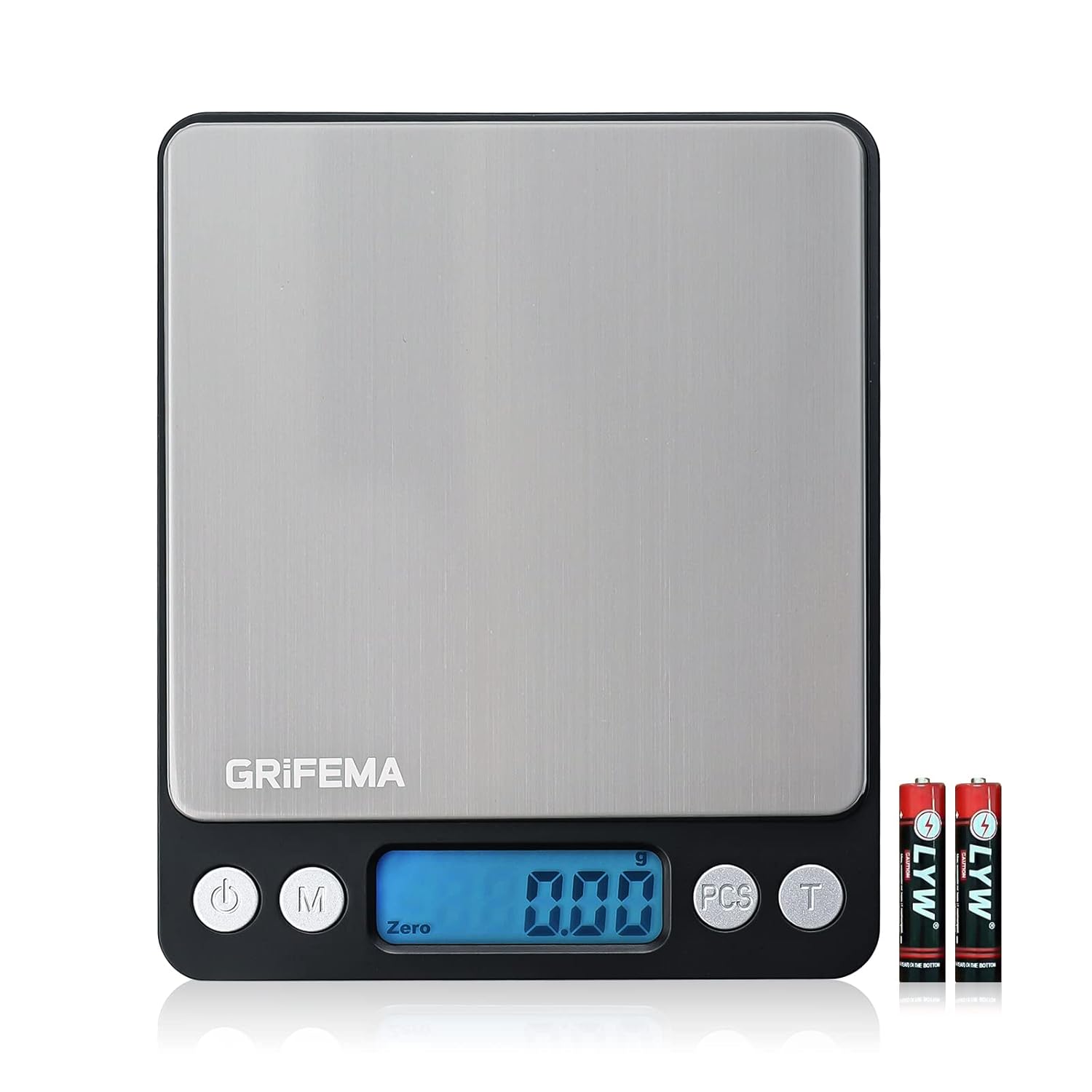
A precision scale with 0.01 g resolution is not optional but a must for long fermentation. For 72 hours in the fridge, 700 g of flour needs only about 0.5 g of dry yeast (Neapolitan, 65%, according to the PizzaPlan calculator) - you simply cannot hit that with a 1 g kitchen scale. Just 0.5 g too much doubles the amount of yeast.

A proofing box with a lid instead of cling film saves nerves: 4-6 dough balls fit inside, ripen side by side without sticking together, and the lid keeps the humidity in. A 30x40 cm box fits in any fridge. Individual silicone containers for one ball each are more elegant but more expensive and need more shelf space.

  • Digital precision scale (0.1 g resolution)
  • Dough scraper / bench knife
  • Large mixing bowl
  • Proofing box or covered dough container
6

Cutting Tools

Pizza wheels work for firm toppings with a thin tomato sauce. On mozzarella-heavy pizzas they drag the cheese along and tear the base. The solution: a rocking knife or a really large pair of scissors - both cut straight down instead of dragging.

Rocking knives are standard in Italian households because they also portion a finished Roman-style tray pizza cleanly. Choose a blade of at least 30 cm, otherwise the back-and-forth gets annoying. A ball-bearing steel wheel is the middle ground if you have no room for a rocking knife.

  • Pizza wheel (steel, ball bearing)
  • Rocking knife
7

Temperature Control

An infrared thermometer for the baking surface pays for itself in saved pizza bases. The hotter the stone, the faster the bottom browns: Neapolitan pizza bakes at 430-480°C in 60-90 seconds. If the stone is well below that (under about 350°C), the bottom dries out before it browns properly. You only see the difference when you measure, not from the oven's display (the display shows air temperature, and the stone can differ noticeably from it).

A room thermometer helps with planning a direct dough: PizzaPlan calculates the yeast for a room temperature of 20-22°C. In a kitchen in high summer it can be 26-28°C - fermentation then runs faster and the dough is ready 1-2 hours earlier than planned.

  • Infrared thermometer (baking surface)
  • Room thermometer
8

Optional Equipment

What we actually use: a flour shaker (semola spreads evenly without clumps), a brass-bristle oven brush (clear flour residue between pizzas) and a small turning peel for outdoor ovens without a rotating floor. What stays in the cupboard: designer pizza cutters, heated serving plates, peels made of exotic wood.

Rule of thumb: if a tool has not been within arm's reach after 10 bake sessions, you do not need it. Pizza rewards subtraction more than addition.

  • Flour duster
  • Proofing boxes with lid
  • Oven brush
  • Turning peel
9

Note on Product Recommendations

We use Amazon affiliate links because they do not add a cent to your price, and a small share comes to us to cover the app's server costs. Anything that does not convince us is not listed here - not even if it would earn a higher commission.

If you see a recommendation differently or miss a tool, write to us via the support page. The list is updated based on experience, not trends.

Christoph

Developer of PizzaPlan, home pizza baker from Forstinning near Munich, Germany. Baking in a wood-fired oven and an Effeuno P134H since 2018.

Every value comes from baking literature and is checked with experienced home bakers before it is published. More on the method

Last reviewed on

Now bake

The right tools make the dough exact.

Download the app and calculate every pizza to the gram.